September 2025

Correlations between family characteristics and childcare in optimizing the growth of children under six years
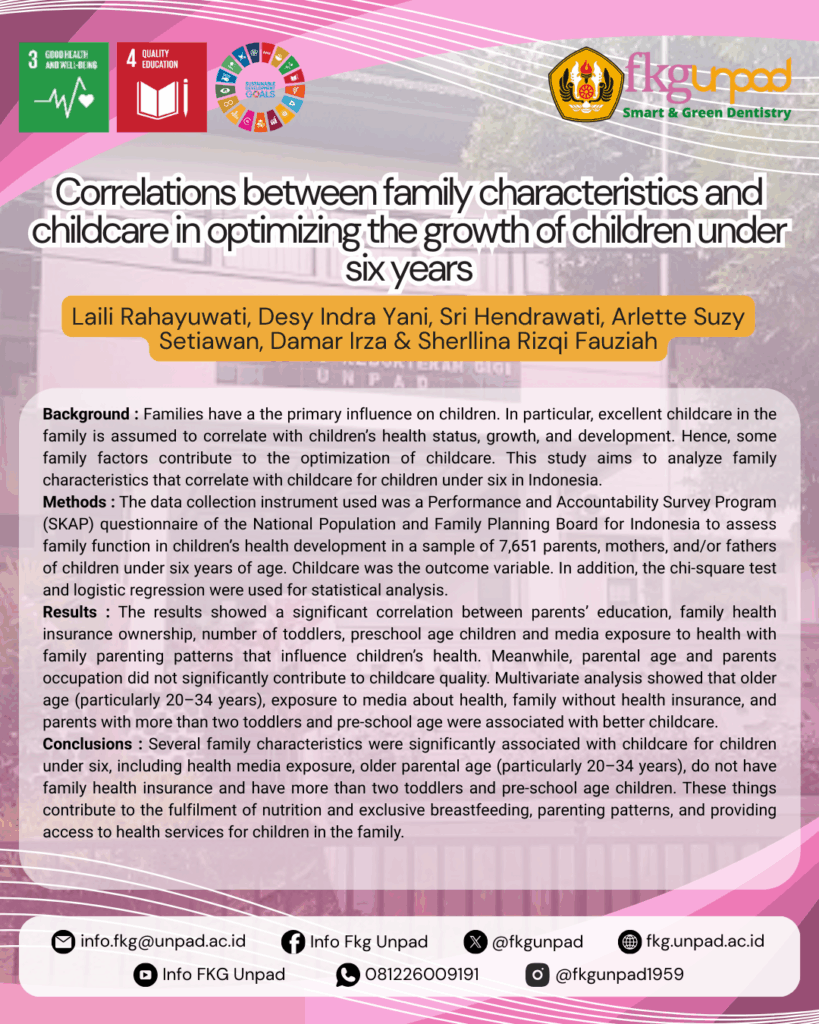
This study of 7,651 Indonesian families found that childcare quality for children under six is influenced by parents’ education, health media exposure, number of young children, and health insurance status. Parental occupation and age showed less impact, though parents aged 20–34 years were linked to better childcare. These factors affect nutrition, breastfeeding, parenting, and access […]

Correlations between family characteristics and childcare in optimizing the growth of children under six years Read More »

Factor Related to Maternal Mortality in Karawang District in Indonesia: Case-Control Study

This study in Karawang Regency found that maternal deaths are strongly linked to older maternal age and delays in seeking or accessing health care. Women who delayed seeking help had over six times higher risk of death. The findings highlight the need to improve timely access to maternal health services to reduce mortality. Read full

Factor Related to Maternal Mortality in Karawang District in Indonesia: Case-Control Study Read More »

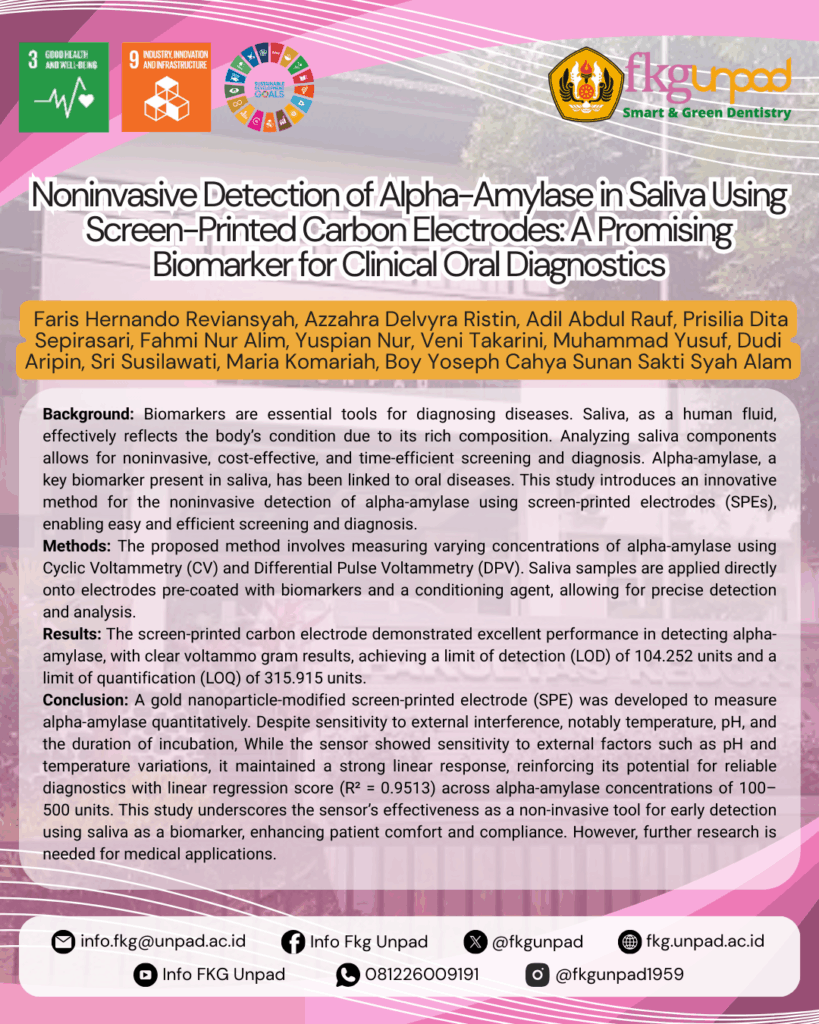
Noninvasive Detection of Alpha-Amylase in Saliva Using Screen-Printed Carbon Electrodes: A Promising Biomarker for Clinical Oral Diagnostics

This study developed a gold nanoparticle-modified screen-printed electrode (SPE) for noninvasive detection of alpha-amylase in saliva. The sensor showed good accuracy, strong linear response, and potential as a diagnostic tool, though it is sensitive to external factors like pH and temperature. Further research is needed for medical application. Read full paper : https://www.scopus.com/pages/publications/85215624985 #FKGUnpad#SDGs#BetterOralHealth#GlobalSustainability#SustainableDevelopmentGoals#SmartGreenDentistry#SustainableDentistry#SDG3#SDG9

Noninvasive Detection of Alpha-Amylase in Saliva Using Screen-Printed Carbon Electrodes: A Promising Biomarker for Clinical Oral Diagnostics Read More »

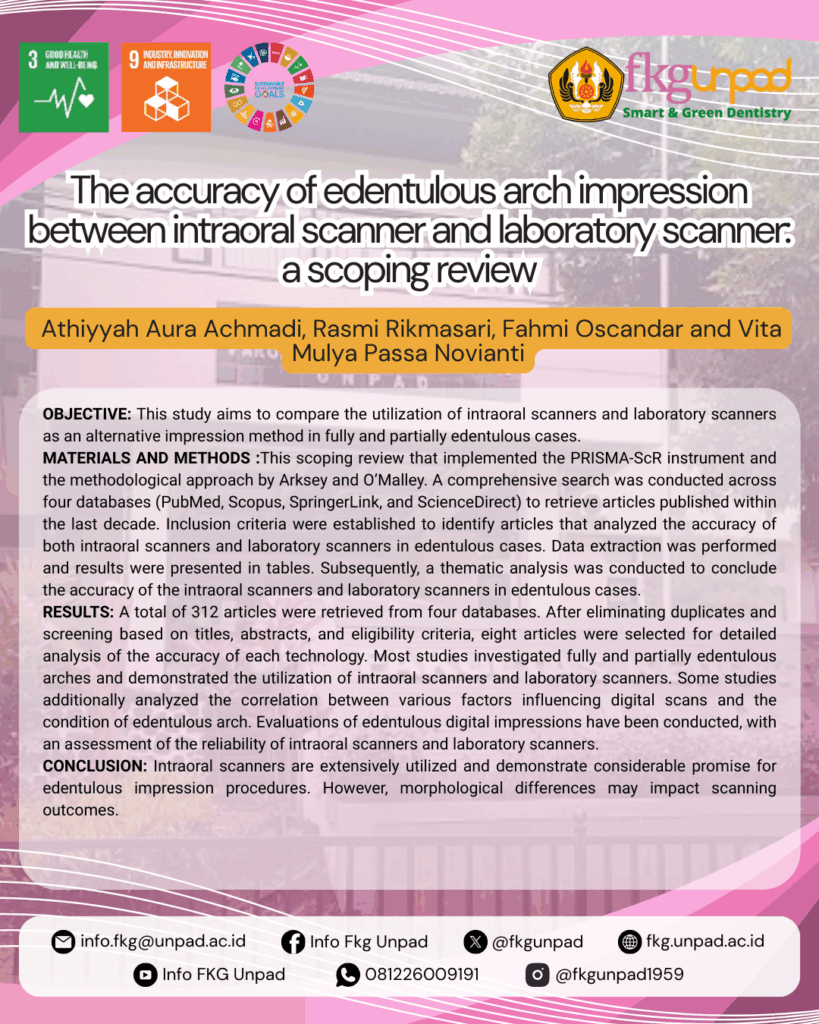
The accuracy of edentulous arch impression between intraoral scanner and laboratory scanner: a scoping review

This scoping review compared intraoral and laboratory scanners for impressions in fully and partially edentulous cases. From 312 studies, eight were analyzed, showing both scanners are reliable, with intraoral scanners widely used and promising, though outcomes may be affected by arch morphology. Read full paper : https://www.scopus.com/pages/publications/85218837660 #FKGUnpad#SDGs#BetterOralHealth#GlobalSustainability#SustainableDevelopmentGoals#SmartGreenDentistry#SustainableDentistry#SDG3#SDG9

The accuracy of edentulous arch impression between intraoral scanner and laboratory scanner: a scoping review Read More »

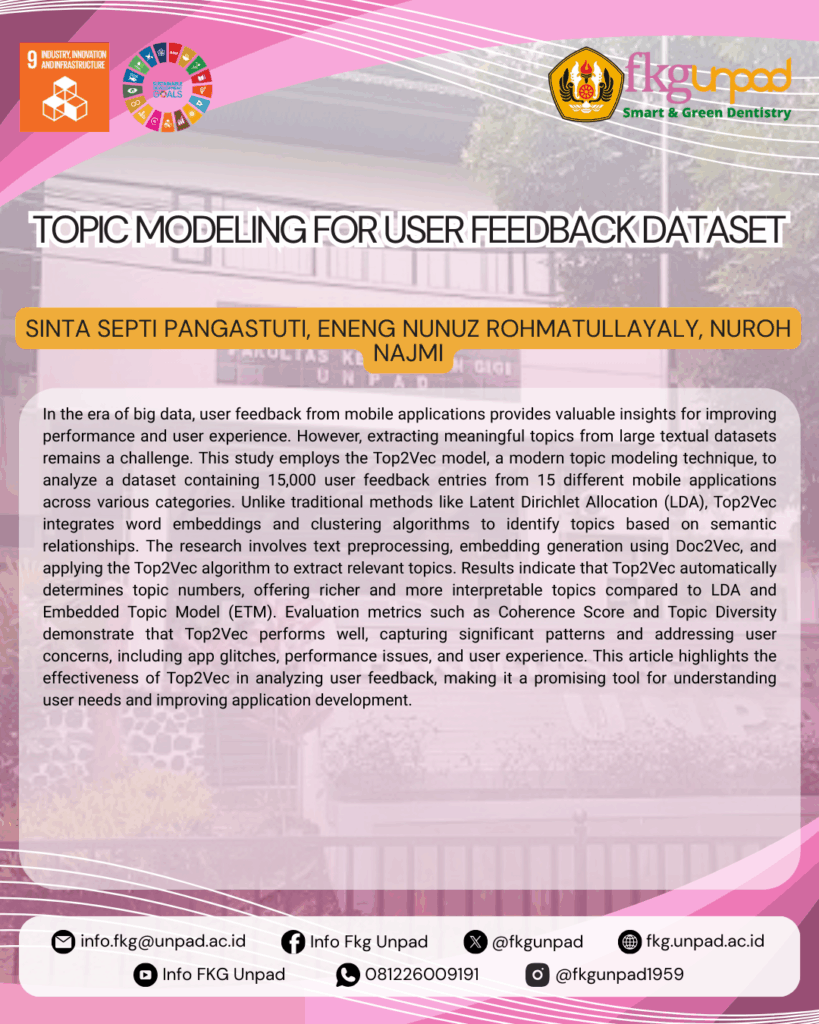
TOPIC MODELING FOR USER FEEDBACK DATASET

This study analyzed 15,000 mobile app feedback entries using the Top2Vec model, which integrates word embeddings and clustering for topic modeling. Compared to traditional methods like LDA, Top2Vec produced more meaningful and diverse topics, effectively capturing user concerns such as glitches, performance, and experience. It shows strong potential for improving app development through better feedback

TOPIC MODELING FOR USER FEEDBACK DATASET Read More »

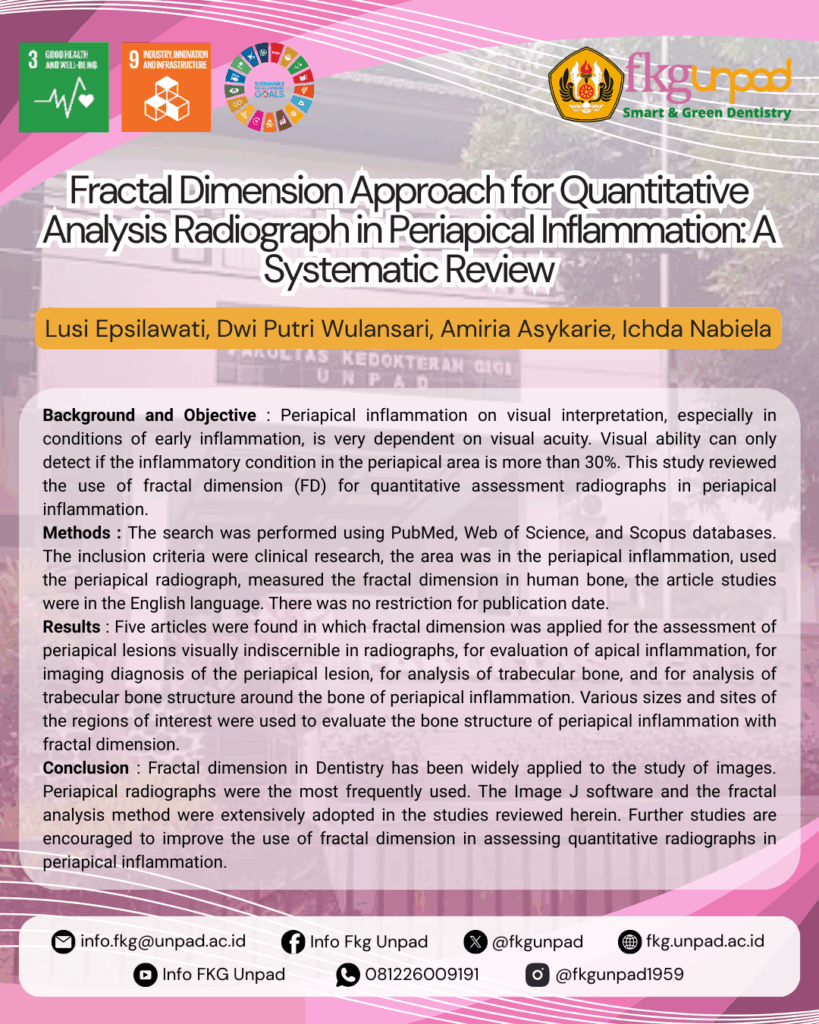
Fractal Dimension Approach for Quantitative Analysis Radiograph in Periapical Inflammation: A Systematic Review

This review highlights the use of fractal dimension (FD) analysis as a quantitative tool to assess periapical inflammation in radiographs, which is difficult to detect visually in early stages. From five selected studies, FD was shown useful for evaluating apical inflammation, periapical lesions, and trabecular bone structure. Most studies used periapical radiographs, ImageJ software, and

Fractal Dimension Approach for Quantitative Analysis Radiograph in Periapical Inflammation: A Systematic Review Read More »

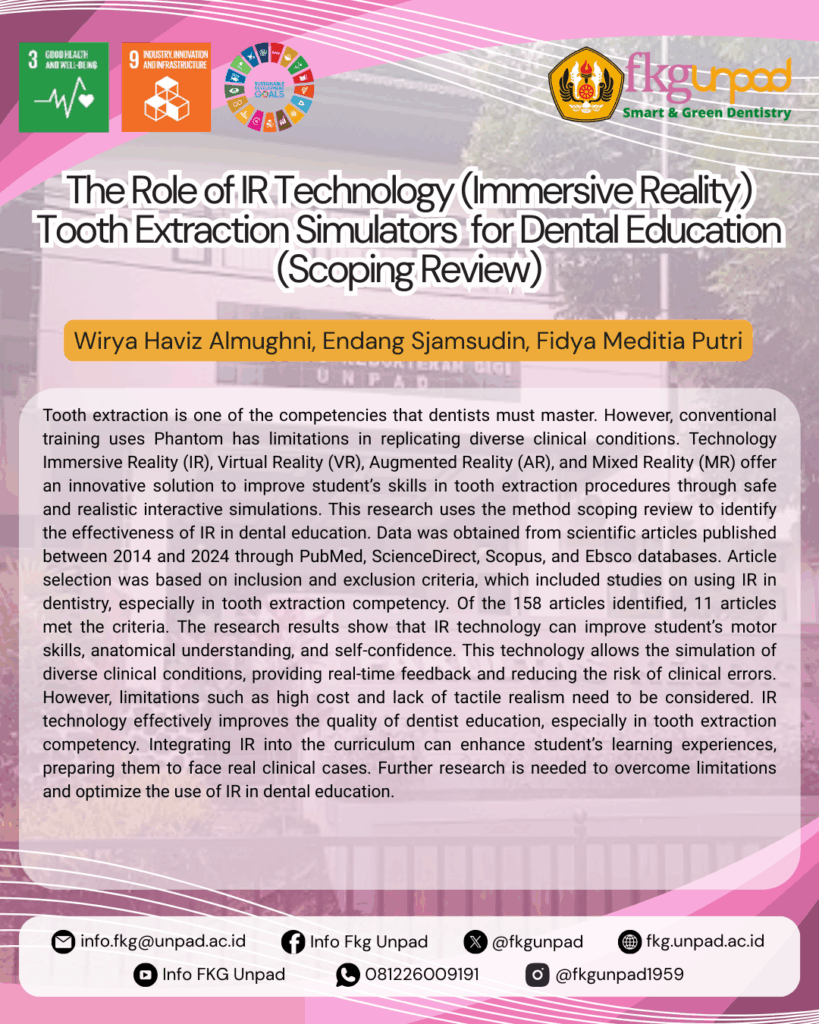
The Role of IR Technology (Immersive Reality) Tooth Extraction Simulators for Dental Education (Scoping Review)

This scoping review analyzed 11 studies on immersive reality (IR) technologies—VR, AR, and MR—in dental education, especially tooth extraction training. IR was found to enhance students’ motor skills, anatomy knowledge, confidence, and clinical preparedness through realistic simulations and feedback. Despite challenges like high cost and limited tactile realism, IR shows strong potential to improve dental

The Role of IR Technology (Immersive Reality) Tooth Extraction Simulators for Dental Education (Scoping Review) Read More »

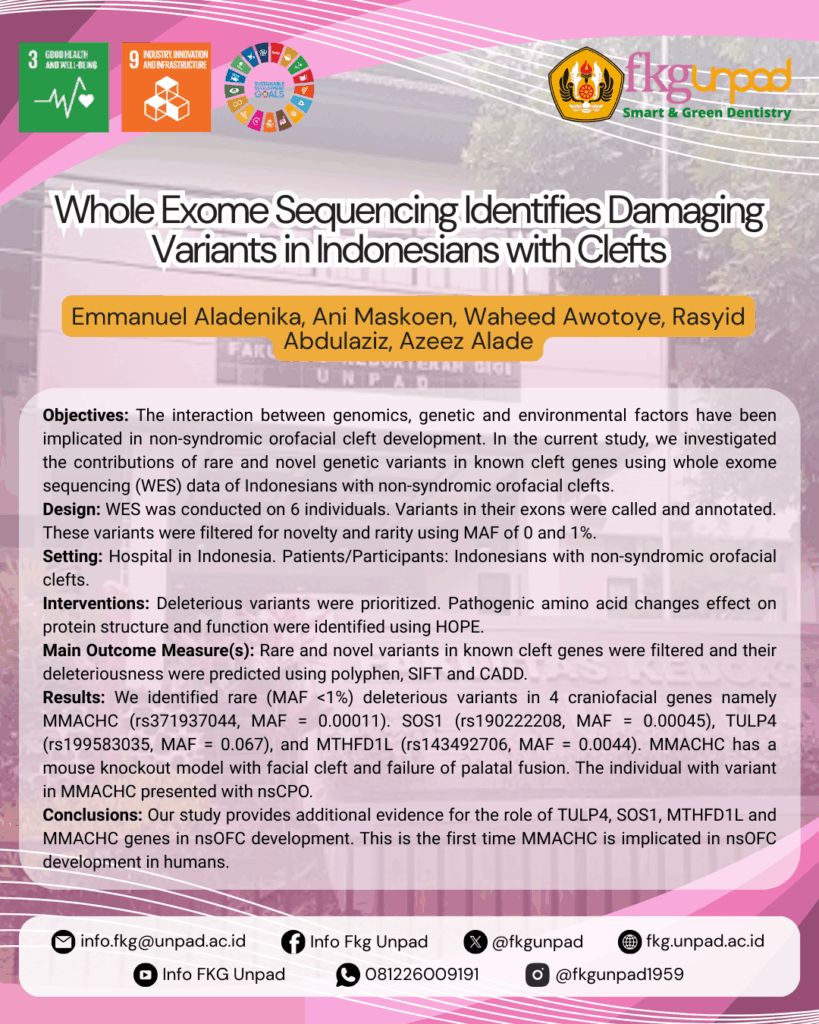
Whole Exome Sequencing Identifies Damaging Variants in Indonesians with Clefts

This study used whole exome sequencing on Indonesians with non-syndromic orofacial clefts and found rare deleterious variants in four genes (MMACHC, SOS1, TULP4, MTHFD1L). Importantly, MMACHC is reported for the first time in humans as potentially linked to cleft development, supporting its role along with the other genes in nsOFC pathogenesis. Read full paper :

Whole Exome Sequencing Identifies Damaging Variants in Indonesians with Clefts Read More »

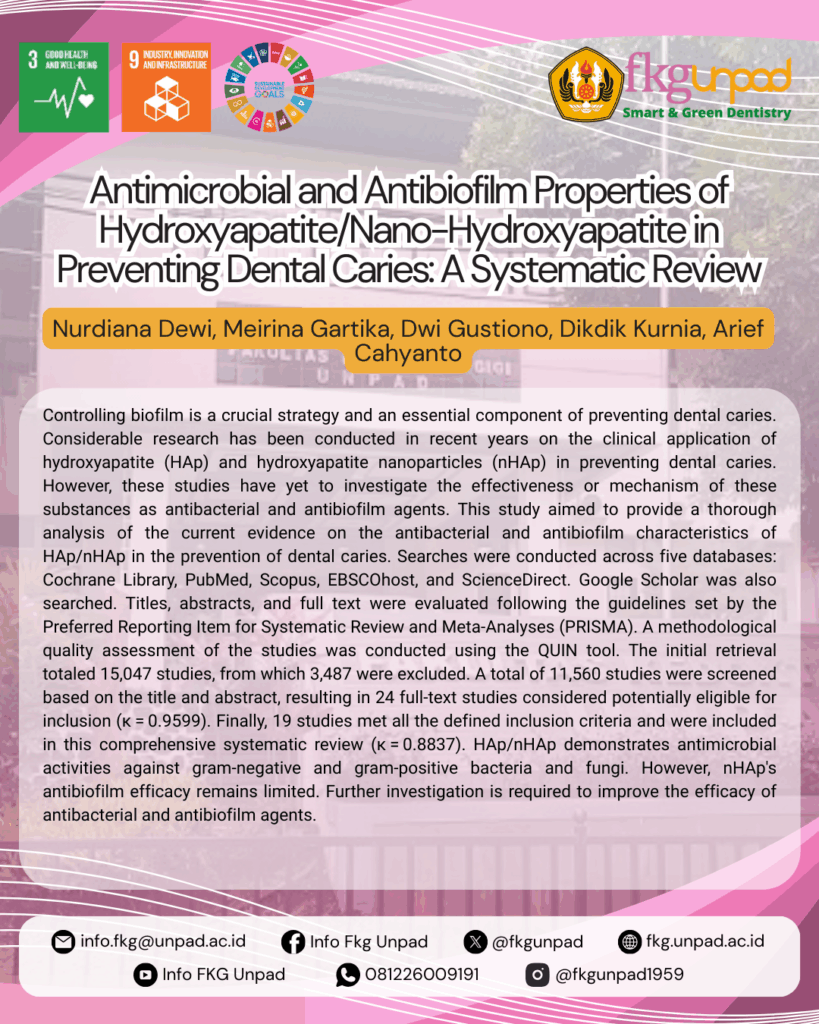
Antimicrobial and Antibiofilm Properties of Hydroxyapatite/Nano-Hydroxyapatite in Preventing Dental Caries: A Systematic Review

This systematic review analyzed 19 studies on hydroxyapatite (HAp) and nano-hydroxyapatite (nHAp) in dental caries prevention. Findings show both have antimicrobial effects against various bacteria and fungi, but nHAp shows limited antibiofilm activity. More research is needed to enhance their effectiveness as antibacterial and antibiofilm agents. Read full paper : https://doi.org/10.1055/s-0045-1802568 #FKGUnpad#SDGs#BetterOralHealth#GlobalSustainability#SustainableDevelopmentGoals#SmartGreenDentistry#SustainableDentistry#SDG3#SDG9

Antimicrobial and Antibiofilm Properties of Hydroxyapatite/Nano-Hydroxyapatite in Preventing Dental Caries: A Systematic Review Read More »

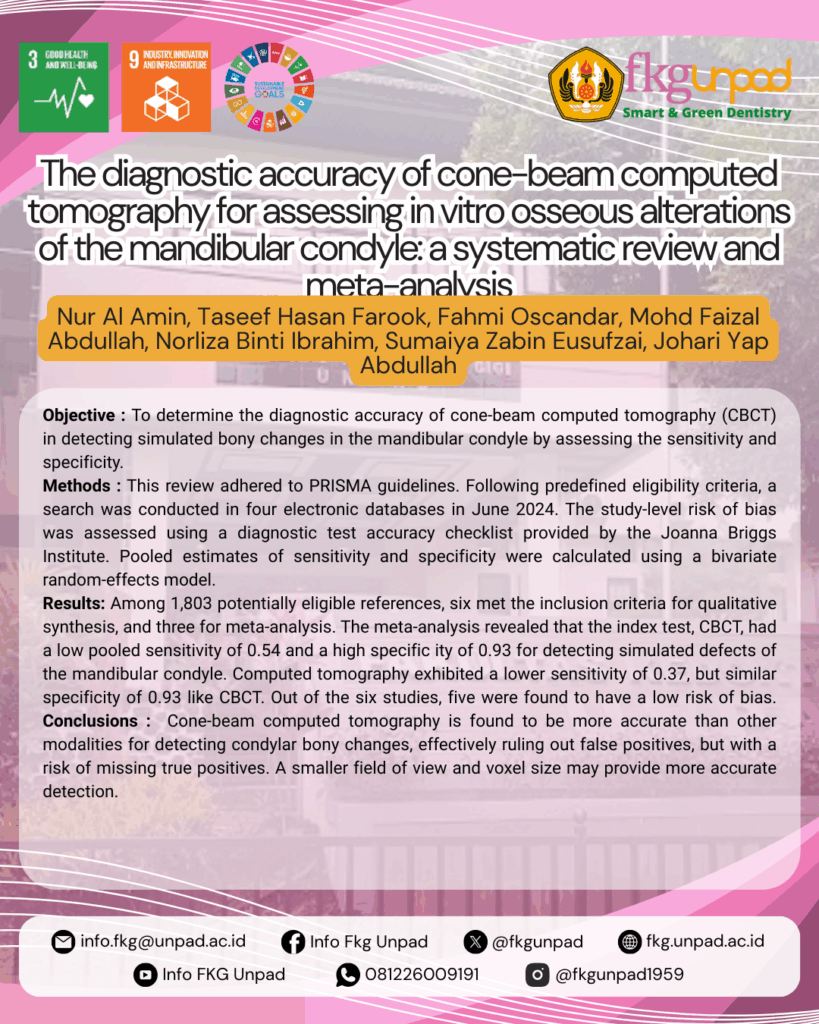
The diagnostic accuracy of cone-beam computed tomography for assessing in vitro osseous alterations of the mandibular condyle: a systematic review and meta-analysis

This review found that cone-beam CT (CBCT) is highly specific (93%) but moderately sensitive (54%) in detecting mandibular condyle bony changes. CBCT is more accurate than conventional CT, reducing false positives but with some risk of missing true positives. Smaller field of view and voxel size may improve accuracy. Read full paper : https://doi.org/10.1007/s11282-025-00821-6 #FKGUnpad#SDGs#BetterOralHealth#GlobalSustainability#SustainableDevelopmentGoals#SmartGreenDentistry#SustainableDentistry#SDG3#SDG9

The diagnostic accuracy of cone-beam computed tomography for assessing in vitro osseous alterations of the mandibular condyle: a systematic review and meta-analysis Read More »

Scroll to Top