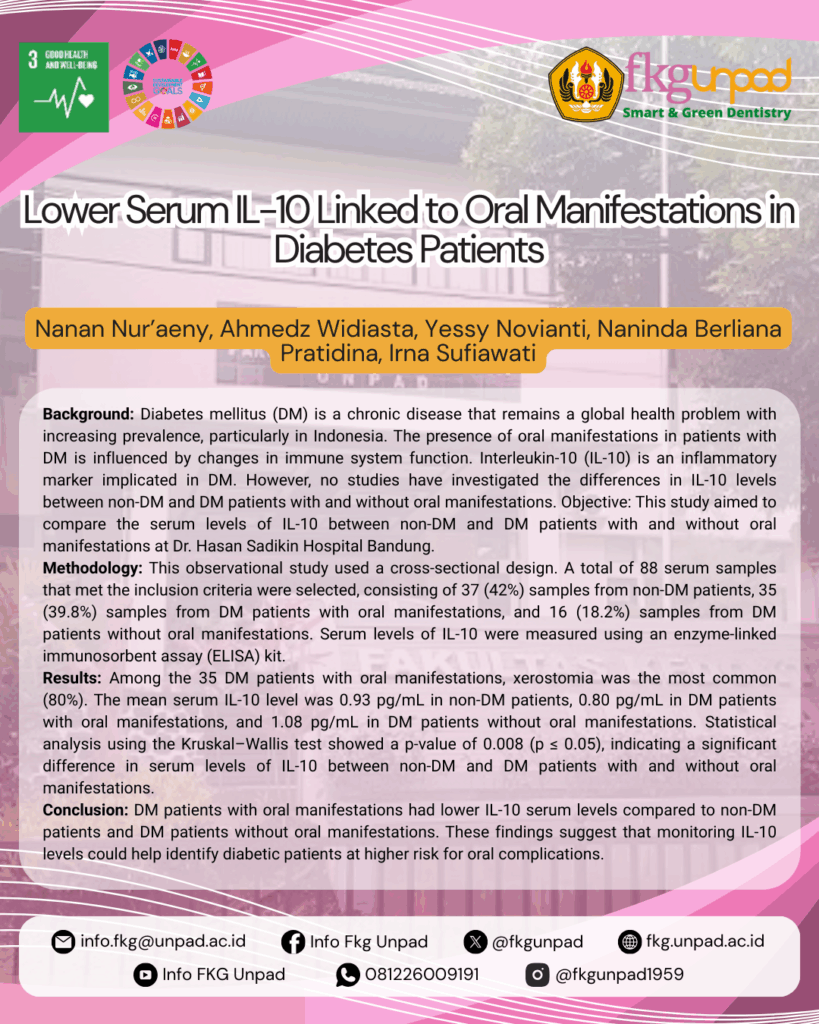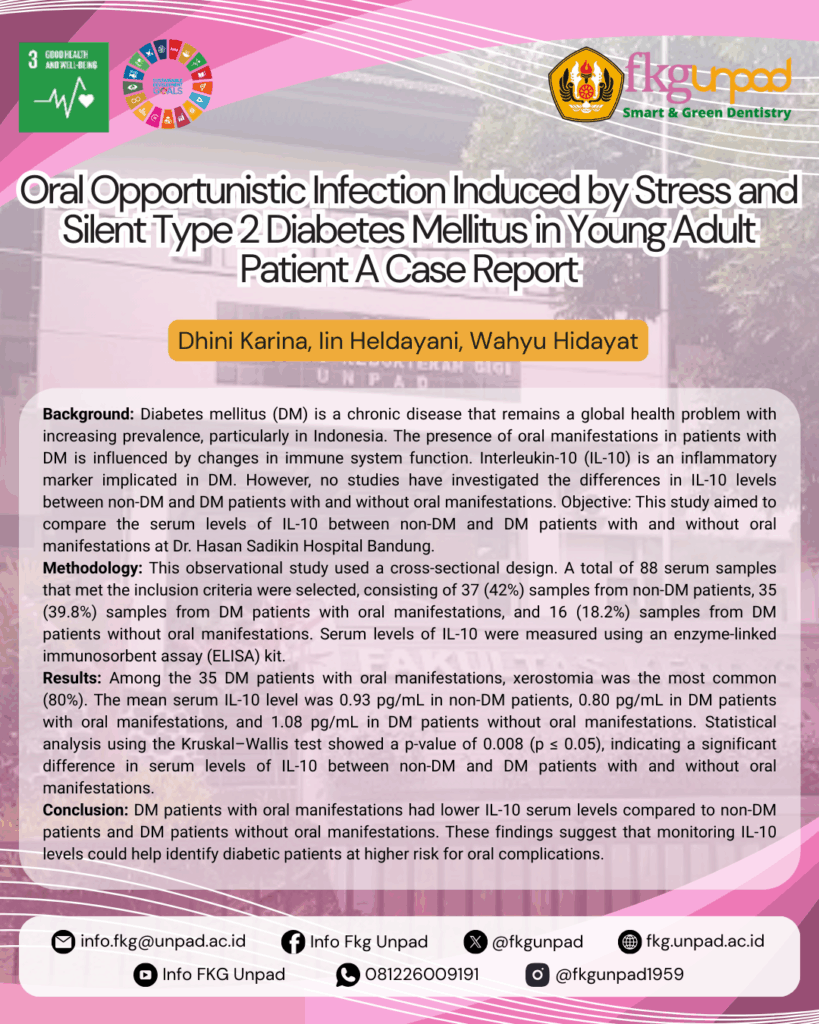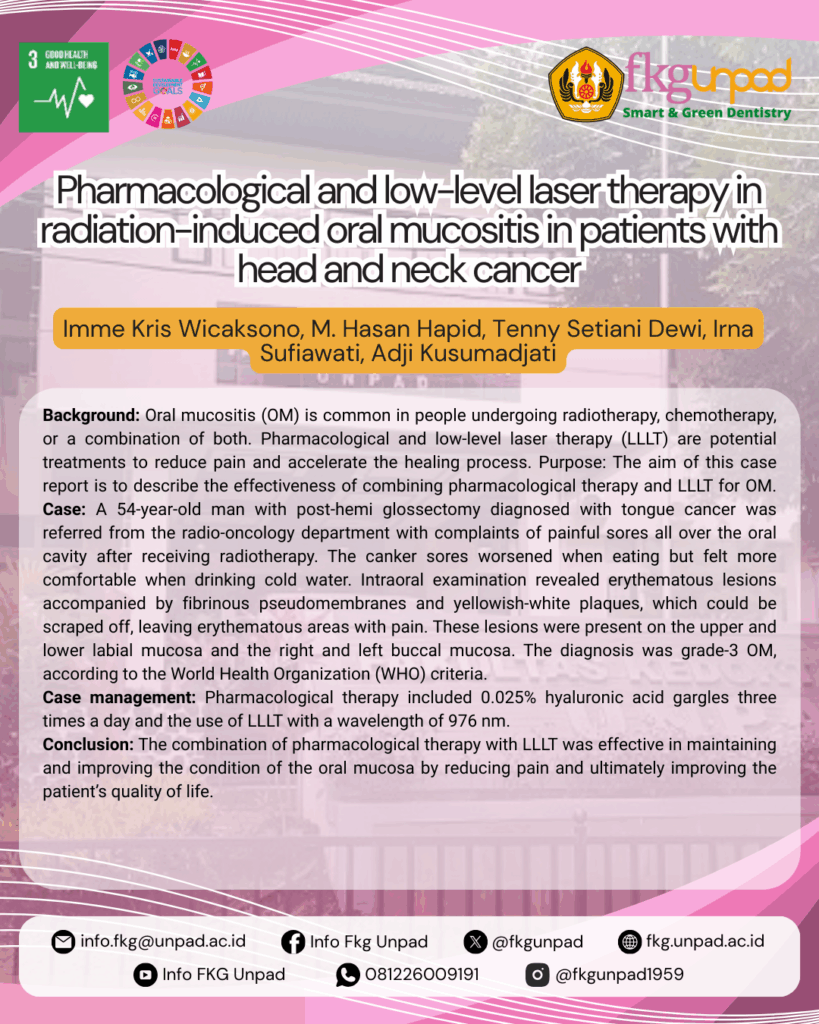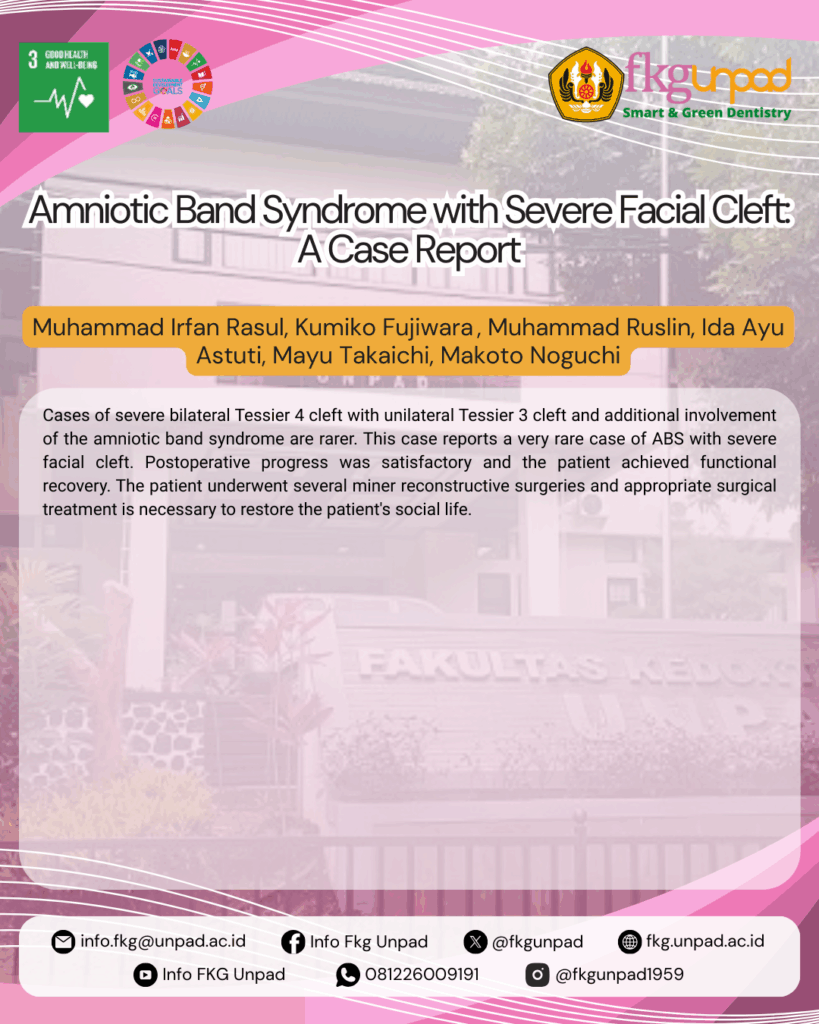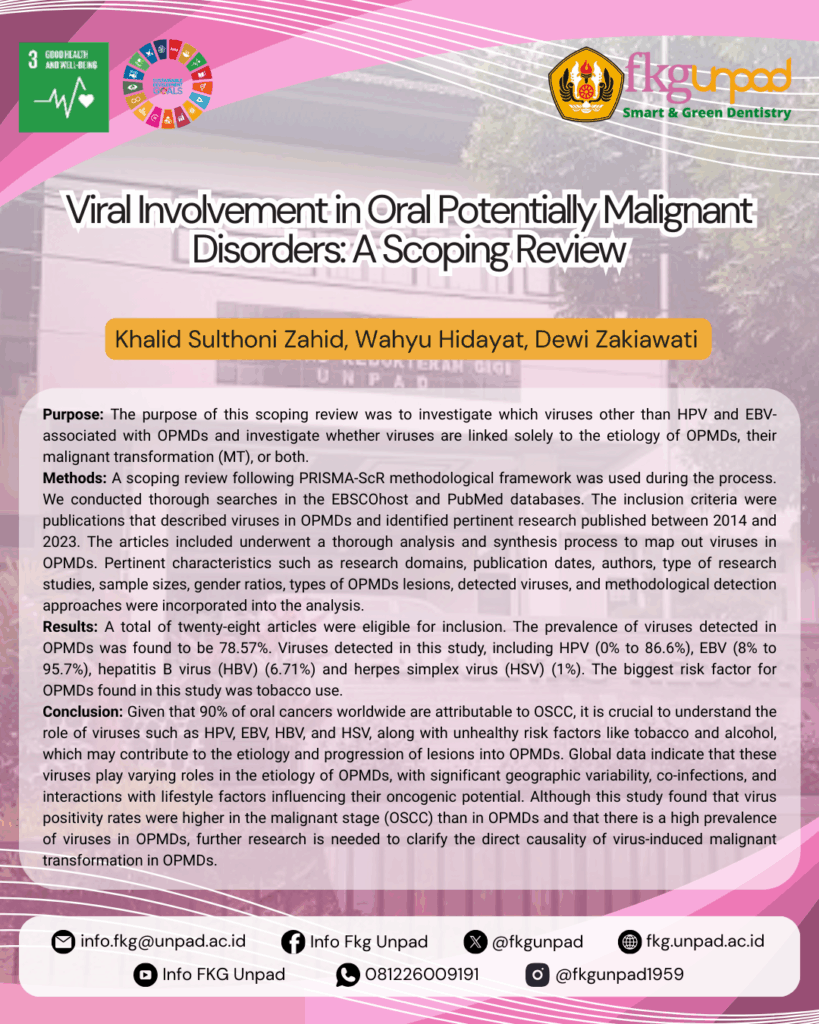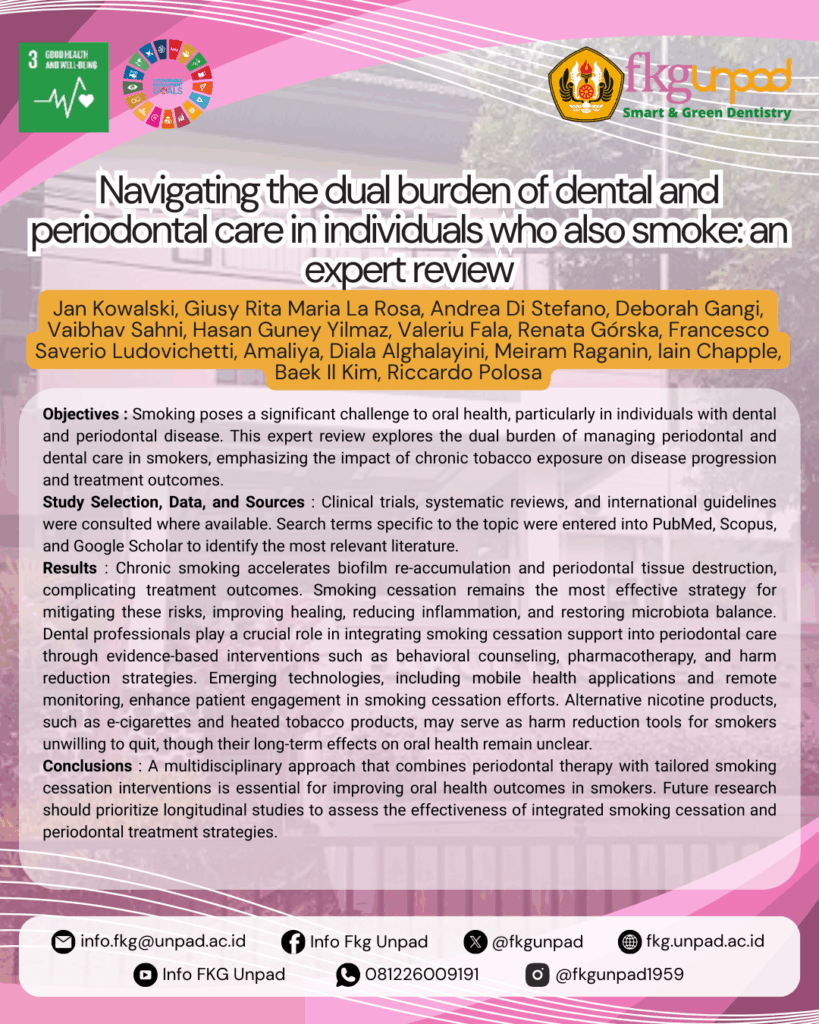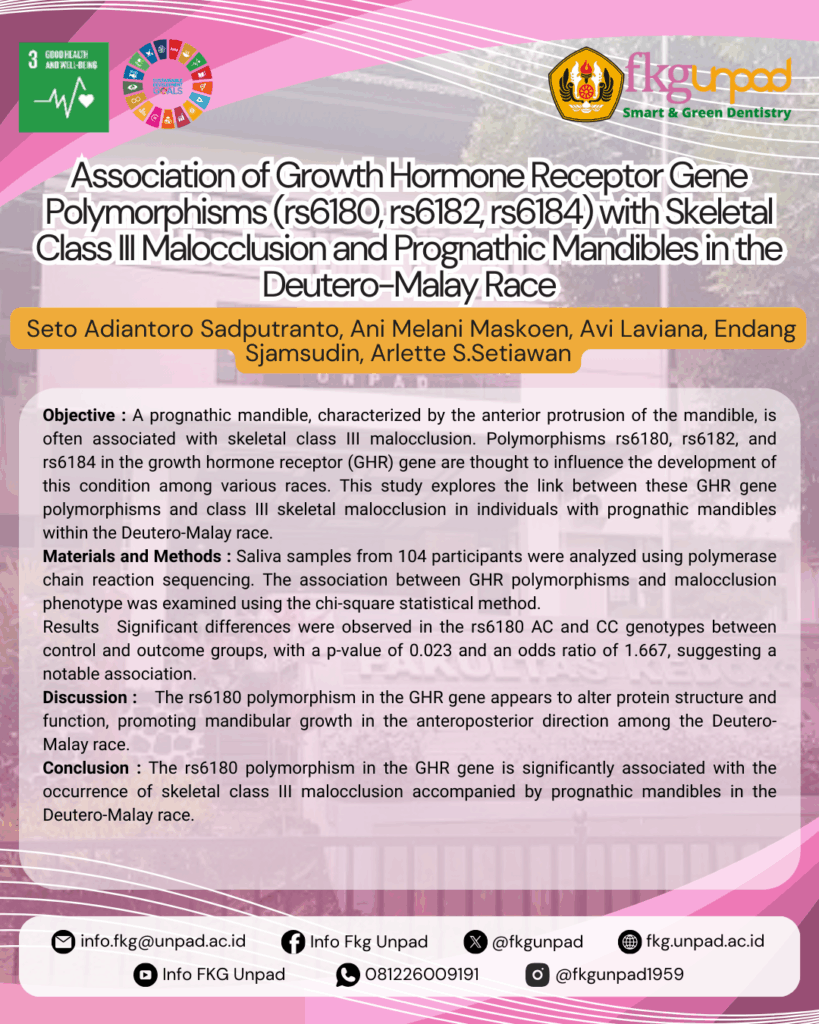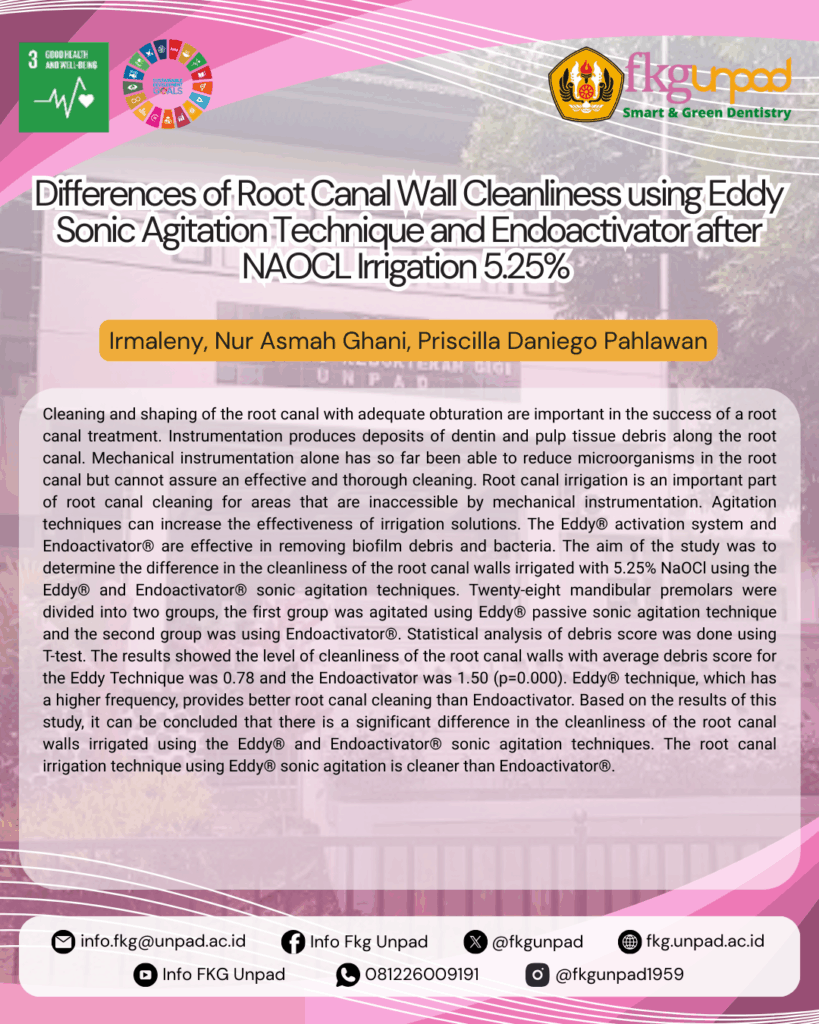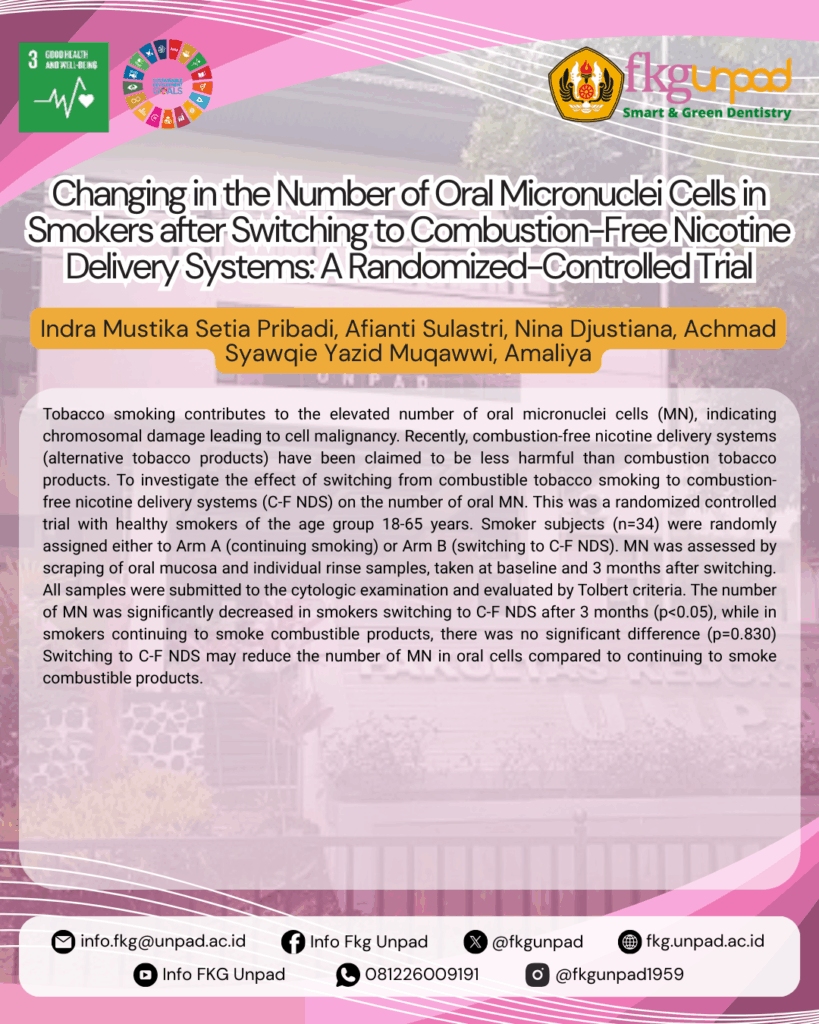
Changing in the Number of Oral Micronuclei Cells in Smokers after Switching to Combustion-Free Nicotine Delivery Systems: A Randomized-Controlled Trial

This randomized trial found that smokers who switched to combustion-free nicotine delivery systems (C-F NDS) showed a significant reduction in oral micronuclei (markers of chromosomal damage) after 3 months, while those who continued smoking did not. Read full paper : https://www.jidmr.com/journal/wp-content/uploads/2025/03/29-D25_3397_Amaliya_Amaliya_Indonesia-Clin.pdf #FKGUnpad#SDGs#BetterOralHealth#GlobalSustainability#SustainableDevelopmentGoals#SmartGreenDentistry#SustainableDentistry#SDG3

Changing in the Number of Oral Micronuclei Cells in Smokers after Switching to Combustion-Free Nicotine Delivery Systems: A Randomized-Controlled Trial Read More »

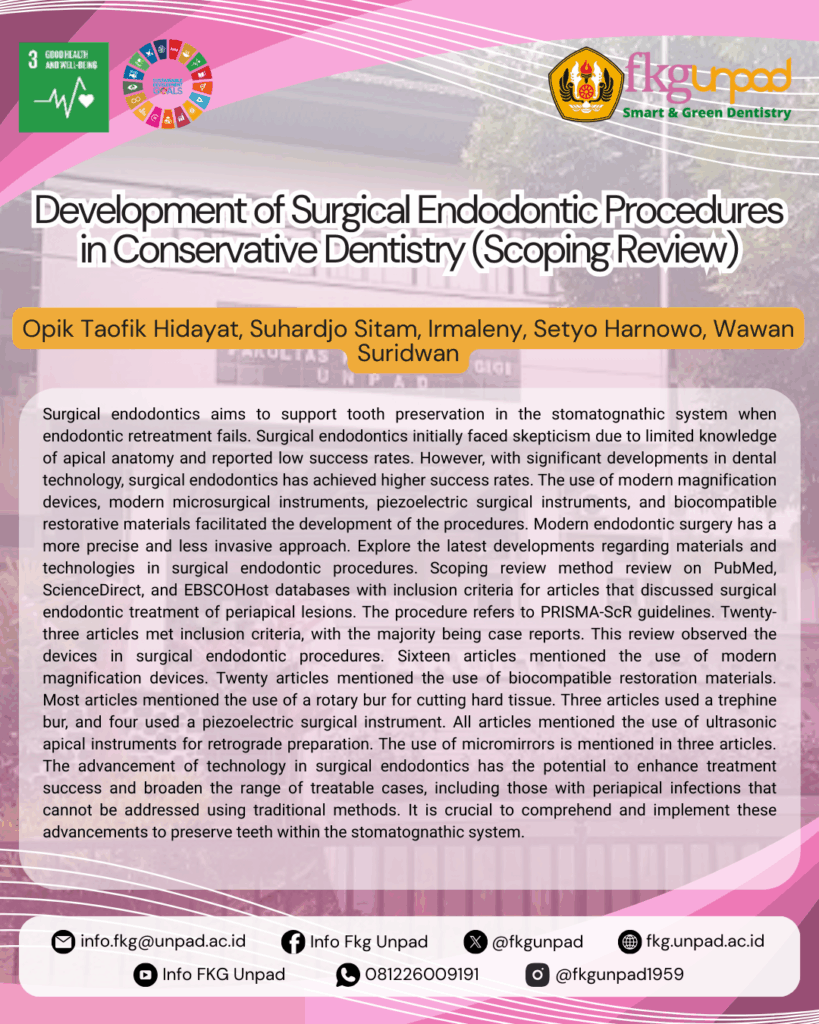
Development of Surgical Endodontic Procedures in Conservative Dentistry (Scoping Review)

This scoping review highlights advancements in surgical endodontics, showing that modern tools—such as magnification devices, ultrasonic instruments, piezoelectric surgery, and biocompatible materials—have improved precision, reduced invasiveness, and increased success rates. These technologies expand treatment options for complex periapical lesions and support better tooth preservation. Read full paper : https://www.jidmr.com/journal/wp-content/uploads/2025/03/62-D24_3259_Opik_Taofik_Hidayat_Indonesia-Rev.pdf #FKGUnpad#SDGs#BetterOralHealth#GlobalSustainability#SustainableDevelopmentGoals#SmartGreenDentistry#SustainableDentistry#SDG3

Development of Surgical Endodontic Procedures in Conservative Dentistry (Scoping Review) Read More »

Oral health effects of non-combustible nicotine products: protocol for a systematic review and network meta-analysis

This study will systematically review and analyze randomized controlled trials to understand the oral health effects of non-combustible nicotine products (NCNPs) like e-cigarettes, nicotine pouches, and snus. It compares these products to each other, placebos, standard care, no treatment, and traditional cigarette smoking. The focus is on oral side effects such as ulcers, dry mouth,

Oral health effects of non-combustible nicotine products: protocol for a systematic review and network meta-analysis Read More »

Anxiety and Sun Exposure as Triggers for Herpes Labialis: A Case Report and Review of Literature

This case report investigates the relationship between herpes labialis (HL), psychological stress, and sun exposure. HL, caused by herpes simplex virus type 1 (HSV-1), can be triggered by factors such as stress, depression, anxiety, ultraviolet (UV) light, fever, and poor diet. The report describes a 20-year-old male florist experiencing severe anxiety and frequent sun exposure

Anxiety and Sun Exposure as Triggers for Herpes Labialis: A Case Report and Review of Literature Read More »

Self-reported oral health outcomes after switching to a novel nicotine pouch technology: a pilot study

This pilot study investigated oral health outcomes after using a new nicotine pouch (Stingfree Strong Blue Mint) designed with an impermeable interior barrier to reduce mucosal irritation. Twenty-three Swedish dentists who were current users of snus or nicotine pouches participated in a 5-week observational study. Results showed a significant reduction in self-reported snus lesions, with

Self-reported oral health outcomes after switching to a novel nicotine pouch technology: a pilot study Read More »

Conservative approach in the management of dentigerous cyst and horizontal impaction tooth through marsupialization: Case report

This paper discusses the use of marsupialization as a conservative approach to treat dentigerous cysts, particularly those associated with impacted teeth, to reduce the risk of pathological fractures and preserve surrounding vital structures. The case report details a 40-year-old male who was diagnosed with a dentigerous cyst in the left mandible. The patient underwent marsupialization,

Conservative approach in the management of dentigerous cyst and horizontal impaction tooth through marsupialization: Case report Read More »

Duration of temporomandibular joint treatment with occlusal splint

This study reviewed 78 TMD patient records (2021–2023) at the Prosthodontics Polyclinic, Universitas Padjadjaran. The average treatment duration with occlusal splints was 4 months, most commonly 3–4 months, with the shortest duration being 1 month and the longest 13 months. Read full paper : https://jdmfs.org/index.php/jdmfs/article/view/1761 #FKGUnpad#SDGs#BetterOralHealth#GlobalSustainability#SustainableDevelopmentGoals#SmartGreenDentistry#SustainableDentistry#SDG3

Duration of temporomandibular joint treatment with occlusal splint Read More »

Management of Periapical Lesion and Discoloration with Periapical Microsurgery Followed up by Internal-External Bleaching and Direct Composite Restoration: One-Year Clinical Evaluation

This case report describes a 22-year-old patient with discolored and infected anterior teeth after childhood trauma and root canal treatment. Endodontic retreatment, periapical microsurgery, bleaching, and direct composite veneers were performed. After one year, bone regeneration and good esthetic results were achieved, showing this approach as effective for managing periapical lesions and tooth discoloration. Read

Management of Periapical Lesion and Discoloration with Periapical Microsurgery Followed up by Internal-External Bleaching and Direct Composite Restoration: One-Year Clinical Evaluation Read More »

Correlation between Salivary pH, Buffer Capacity, and Oral Hygiene in Orthodontic Patients with Non-syndromic Cleft Lip and Palate

This study examined salivary pH, buffer capacity, and oral hygiene in 20 orthodontic patients with non-syndromic cleft lip and palate. Most had normal pH but very low buffer capacity and moderate oral hygiene. Salivary pH showed no significant correlation with oral hygiene, but buffer capacity was significantly related to calculus formation. Read full paper :

Correlation between Salivary pH, Buffer Capacity, and Oral Hygiene in Orthodontic Patients with Non-syndromic Cleft Lip and Palate Read More »

Effect of Fluoride Varnish on Enamel Microhardness: An in vitro Study

This in vitro study tested whether 5% sodium fluoride varnish improves enamel microhardness after demineralization. Forty premolar crowns were examined, and results showed a significant increase in enamel hardness in the fluoride varnish group compared to control. The study confirms fluoride varnish effectively enhances enamel remineralization and can help prevent caries. Read full paper :

Effect of Fluoride Varnish on Enamel Microhardness: An in vitro Study Read More »

Scroll to Top