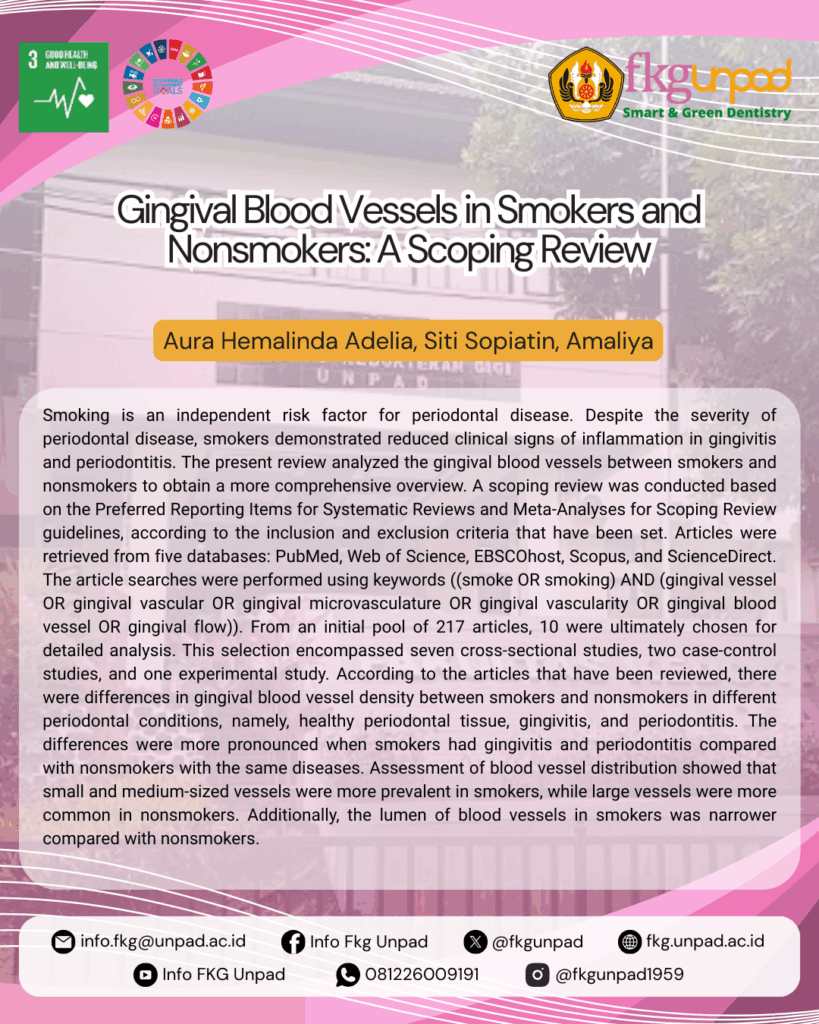
Gingival Blood Vessels in Smokers and Nonsmokers: A Scoping Review

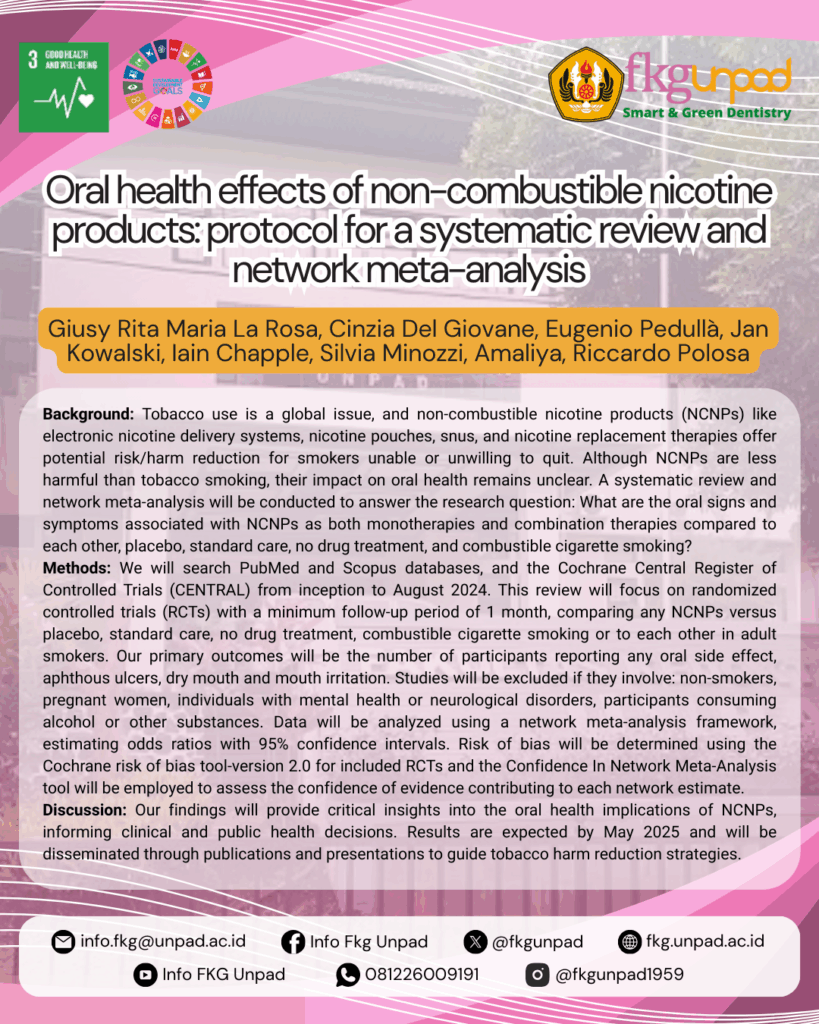
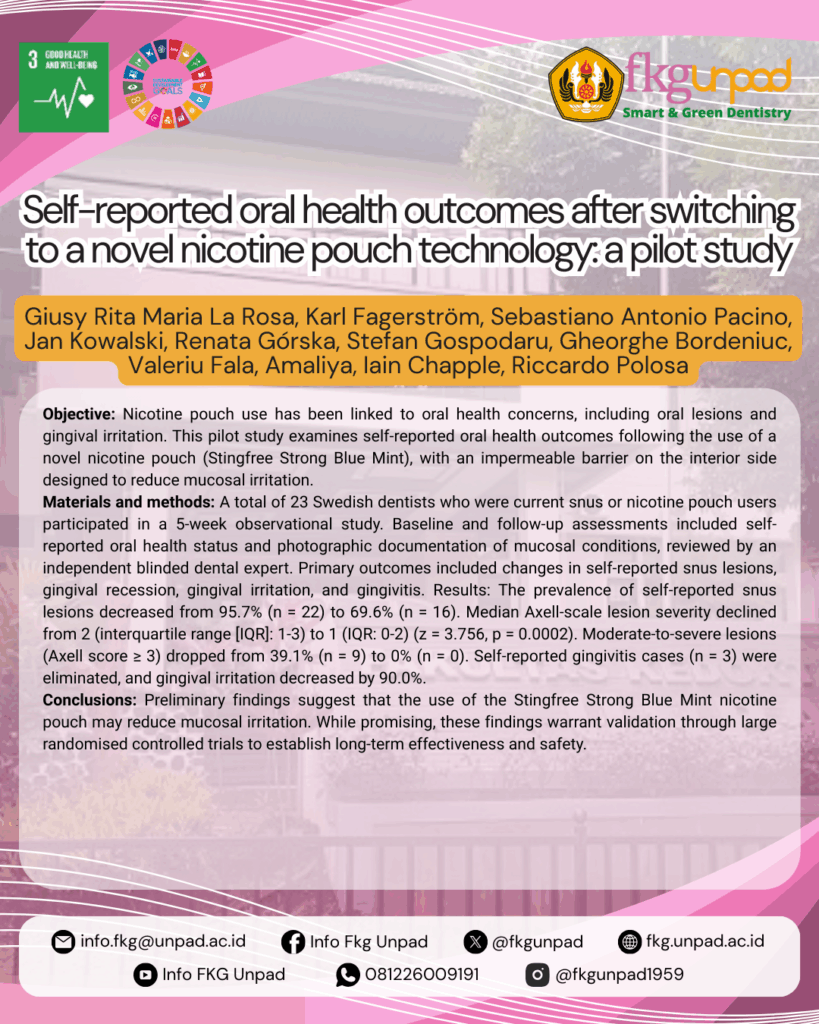
This scoping review analyzed 10 studies comparing gingival blood vessels in smokers and nonsmokers. Findings showed smokers had altered vascularity—more small/medium vessels, fewer large ones, and narrower lumens—especially in gingivitis and periodontitis. These changes may explain why smokers show reduced clinical signs of inflammation despite severe periodontal disease. Read full paper : https://doi.org/10.1055/s-0045-1809913 #FKGUnpad#SDGs#BetterOralHealth#GlobalSustainability#SustainableDevelopmentGoals#SmartGreenDentistry#SustainableDentistry#SDG3

Gingival Blood Vessels in Smokers and Nonsmokers: A Scoping Review Read More »

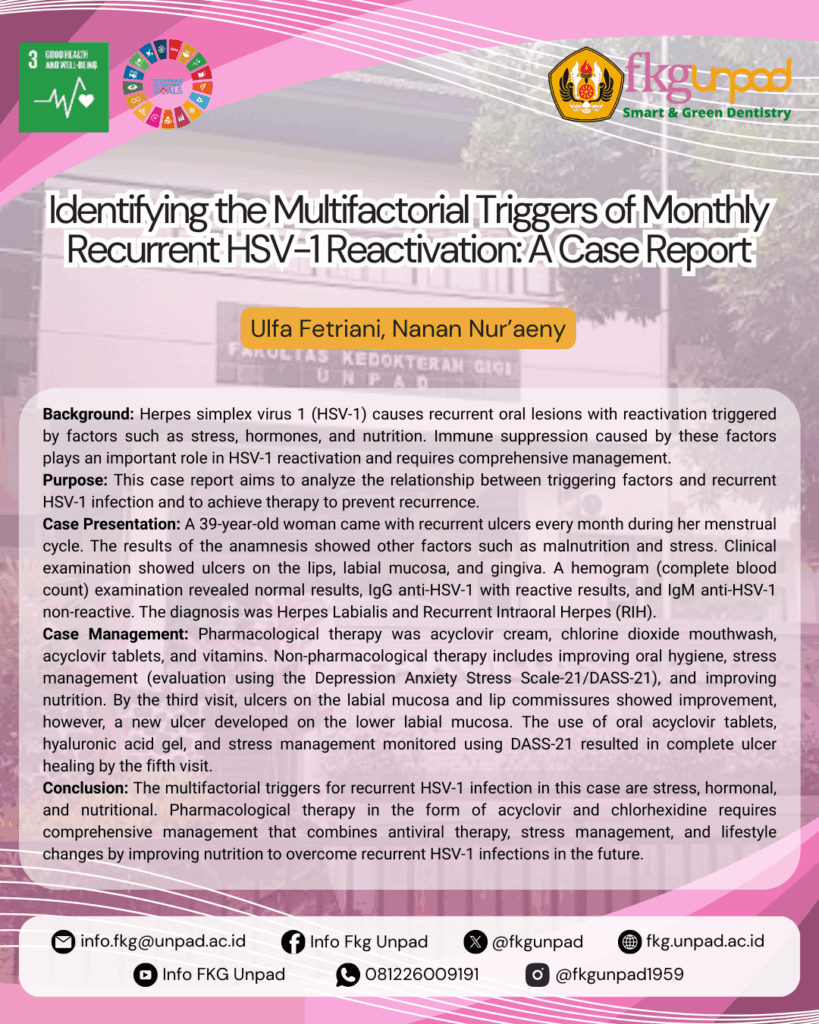
Identifying the Multifactorial Triggers of Monthly Recurrent HSV-1 Reactivation: A Case Report

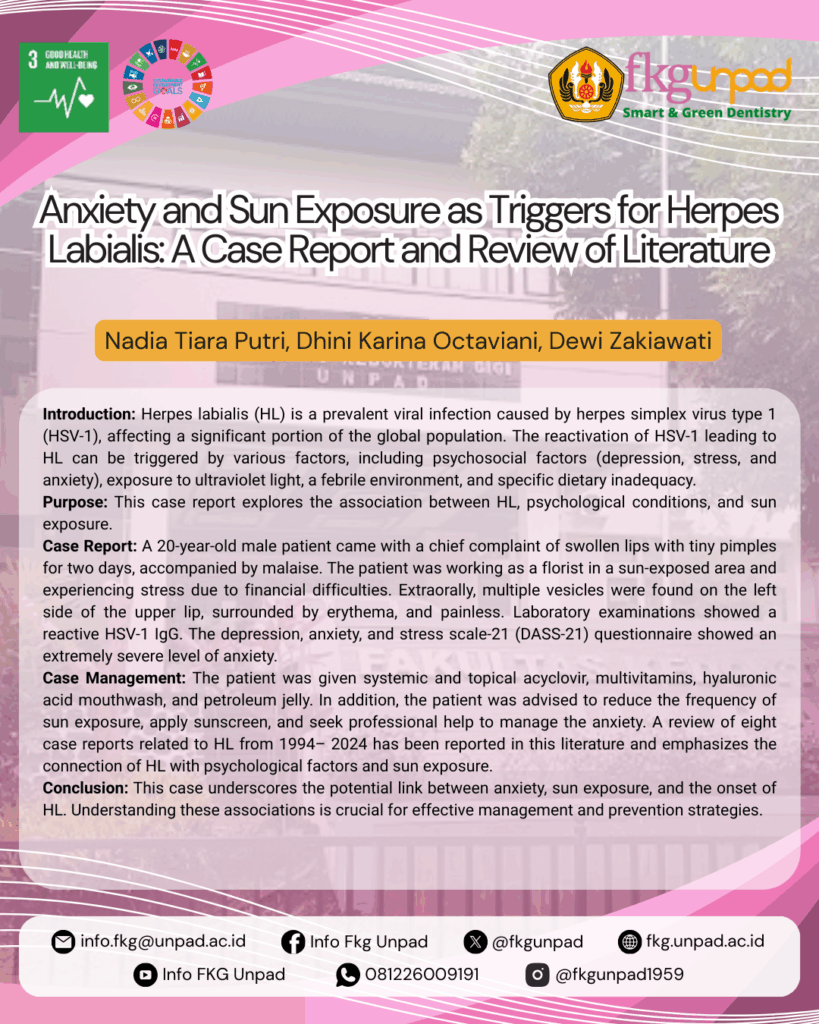
This case report of a 39-year-old woman with recurrent HSV-1 oral lesions highlights stress, hormonal changes, and malnutrition as key triggers. Treatment with acyclovir, mouthwash, vitamins, stress management, and nutritional improvement led to ulcer healing. Comprehensive therapy combining antiviral drugs and lifestyle changes is essential to prevent recurrence. Read full paper : https://doi.org/10.2147/IMCRJ.S536607 #FKGUnpad#SDGs#BetterOralHealth#GlobalSustainability#SustainableDevelopmentGoals#SmartGreenDentistry#SustainableDentistry#SDG3

Identifying the Multifactorial Triggers of Monthly Recurrent HSV-1 Reactivation: A Case Report Read More »

Parental awareness of oral health in children with epidermolysis bullosa in Indonesia

This study on parents of children with epidermolysis bullosa (EB) found that parents generally had good oral health knowledge and perceived their children’s oral health-related quality of life positively across oral, functional, emotional, and social aspects. However, challenges remained in applying this knowledge to daily care. Read full paper : https://doi.org/10.20473/j.djmkg.v58.i3.p249-255 #FKGUnpad#SDGs#BetterOralHealth#GlobalSustainability#SustainableDevelopmentGoals#SmartGreenDentistry#SustainableDentistry#SDG3

Parental awareness of oral health in children with epidermolysis bullosa in Indonesia Read More »

Radiotherapy-Associated Oral Lesions in a Geriatric Patient with Nasal Squamous Cell Carcinoma: A Case Report

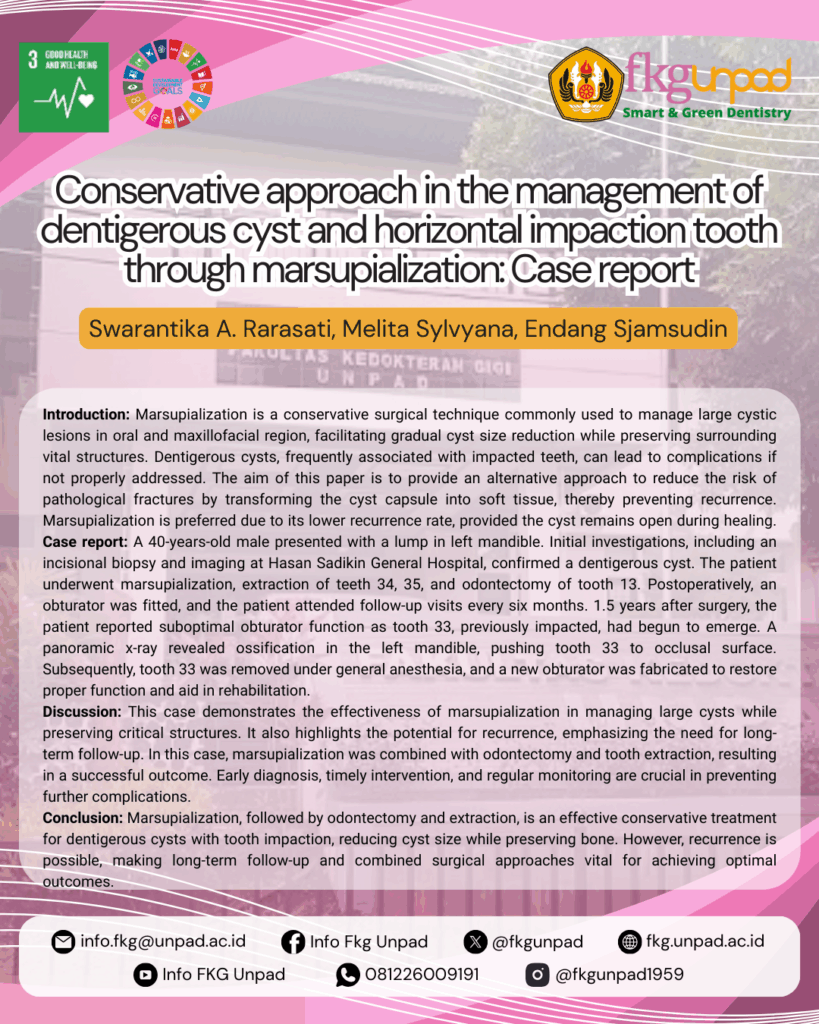
This case report describes a 76-year-old cancer patient who developed severe oral mucositis after radiotherapy. Topical therapy with saline compresses, hyaluronic acid mouthwash, and petroleum jelly led to significant improvement within five days and complete healing by the third visit. The case highlights the value of topical management in reducing treatment disruption and oral frailty

Radiotherapy-Associated Oral Lesions in a Geriatric Patient with Nasal Squamous Cell Carcinoma: A Case Report Read More »

The Characteristics of Electronic Cigarette Users in Indonesia: A Cross-sectional Study

This cross-sectional study of 297 Indonesian vape users found most were men aged 19–44, working, married, and living in major cities, with high school education and income above 5 million/month. Most had used vapes for over 3 years, preferred 6 mg nicotine, consumed 60 ml e-liquid in 2 weeks, and some still smoked conventional cigarettes.

The Characteristics of Electronic Cigarette Users in Indonesia: A Cross-sectional Study Read More »

Prevalence of Early Childhood Caries (ECC) in Children Aged 2–6 years in the Highlands and Lowlands of West Java

This cross-sectional study compared early childhood caries (ECC) in 2–6-year-olds from highland (Bandung) and lowland (Pangandaran) areas of West Java. ECC prevalence was very high in both regions (91.8% vs. 96.1%) with high def-t index scores. Statistical analysis showed no significant difference between the two areas. Read full paper : https://www.tandfonline.com/doi/epdf/10.2147/CCIDE.S467318?src=getftr&utm_source=scopus&getft_integrator=scopus #FKGUnpad#SDGs#BetterOralHealth#GlobalSustainability#SustainableDevelopmentGoals#SmartGreenDentistry#SustainableDentistry#SDG3#SDG4

Prevalence of Early Childhood Caries (ECC) in Children Aged 2–6 years in the Highlands and Lowlands of West Java Read More »

Evidence-based practice teaching in Indonesian dental schools: A survey among faculty members

This nationwide survey of Indonesian dental schools found that although deans highly value evidence-based practice (EBP), its teaching implementation is still limited. Most schools include EBP in their curriculum, mainly through lectures, but face challenges in meeting expectations. Training faculty is seen as a key priority, highlighting the need for stronger faculty development and collaborative

Evidence-based practice teaching in Indonesian dental schools: A survey among faculty members Read More »

Correlations between family characteristics and childcare in optimizing the growth of children under six years

This study of 7,651 Indonesian families found that childcare quality for children under six is influenced by parents’ education, health media exposure, number of young children, and health insurance status. Parental occupation and age showed less impact, though parents aged 20–34 years were linked to better childcare. These factors affect nutrition, breastfeeding, parenting, and access

Correlations between family characteristics and childcare in optimizing the growth of children under six years Read More »

Factor Related to Maternal Mortality in Karawang District in Indonesia: Case-Control Study

This study in Karawang Regency found that maternal deaths are strongly linked to older maternal age and delays in seeking or accessing health care. Women who delayed seeking help had over six times higher risk of death. The findings highlight the need to improve timely access to maternal health services to reduce mortality. Read full

Factor Related to Maternal Mortality in Karawang District in Indonesia: Case-Control Study Read More »

Noninvasive Detection of Alpha-Amylase in Saliva Using Screen-Printed Carbon Electrodes: A Promising Biomarker for Clinical Oral Diagnostics

This study developed a gold nanoparticle-modified screen-printed electrode (SPE) for noninvasive detection of alpha-amylase in saliva. The sensor showed good accuracy, strong linear response, and potential as a diagnostic tool, though it is sensitive to external factors like pH and temperature. Further research is needed for medical application. Read full paper : https://www.scopus.com/pages/publications/85215624985 #FKGUnpad#SDGs#BetterOralHealth#GlobalSustainability#SustainableDevelopmentGoals#SmartGreenDentistry#SustainableDentistry#SDG3#SDG9

Noninvasive Detection of Alpha-Amylase in Saliva Using Screen-Printed Carbon Electrodes: A Promising Biomarker for Clinical Oral Diagnostics Read More »

Scroll to Top